
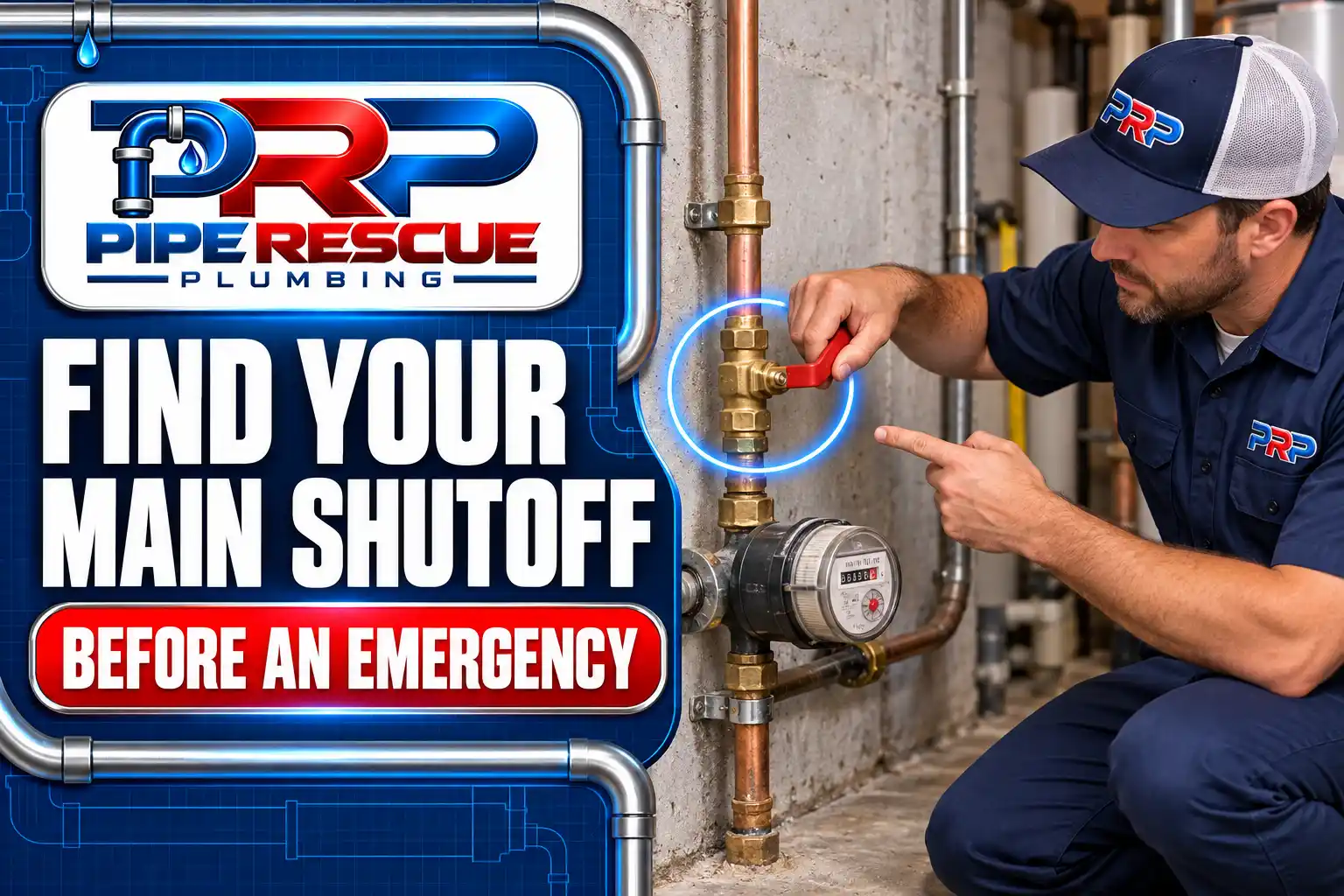
Where is my main water shutoff valve?
Your main water shutoff valve is almost always located where the water line enters your home: in most New Jersey houses, that means the basement, on or near the front foundation wall facing the street, within a few feet of the water meter. In homes without a basement, look in the crawl space, the garage, a utility closet near the water heater, or behind an access panel near the kitchen or a bathroom. The valve will be either a lever-style ball valve (turn the lever a quarter turn, until it sits across the pipe) or a round-handled gate valve (turn the wheel clockwise until it stops). Closing it stops all water flowing into the house, which is the single most important move in nearly every plumbing emergency. Finding it takes five minutes on a calm Tuesday. Finding it during a burst pipe, with water pouring through a ceiling, costs most people the worst twenty minutes of their homeownership. This guide covers where to look, how to turn it, what to do when it is stuck, and the five-minute drill that makes the whole family ready.
Why This One Valve Matters More Than Any Other
Here is the math that makes this post worth your time: a burst pipe or failed supply line releases water at several gallons per minute, and the average emergency call plays out over something like twenty minutes between discovery and water-off. The single variable you control in that equation is how fast the water stops, and the main shutoff is the off switch for the entire house. Every plumbing emergency guide ever written, including our burst pipe guide, begins with the same instruction: shut off the main. This is the article about actually being able to do that.
Where to Look, In Order
1. The basement, front foundation wall. In most NJ homes with basements, the water service enters through the foundation on the street side of the house, and the main valve sits right there, usually within a few feet of the water meter. Follow the largest pipe from the meter and you will find a valve on one or both sides of it. The valve on the house side of the meter is yours to use.
2. No basement? Work through the usual suspects. Crawl space near the front wall, the garage (often where a wall adjoins the kitchen or a bathroom), a utility or laundry closet near the water heater, or behind an access panel in a hallway, closet, or under a sink near the front of the house. In many slab-built homes, the main comes up through the floor near the water heater.
3. Townhouses and condos. Your unit usually has its own shutoff, often near the water heater, under the kitchen sink, in a utility closet, or behind an access panel in a bathroom or hallway. If a failure is beyond your unit's valve, the building's riser or master valve is the next step up, which is a front desk, super, or management call. Knowing both answers, where your unit valve is and who shuts the riser, is the condo version of this entire article.
4. The street-side valve (curb stop). Between the sidewalk and the curb, usually in line with your front door or the meter, sits a small metal cover marked "water." Under it is the curb stop, the utility's valve for your service line. It usually requires a long-handled meter key to operate, and in many towns it is formally the water utility's territory: good to know as the backup when the inside valve fails, but call your utility or a plumber rather than improvising with pliers at the bottom of a four-foot pit.
How to Turn It Off (and What You'll Meet)
Ball valve: a straight lever. A quarter turn so the lever sits perpendicular (across) the pipe = closed. Parallel with the pipe = open. These are newer, more reliable, and close fast.
Gate valve: a round wheel handle, like an outdoor spigot. Clockwise to close, and expect several full turns. These are common in older NJ homes, and they are the ones that cause trouble, because a gate valve that has not moved in fifteen years corrodes in place, and the soft brass stem can snap if forced.
The golden rule for a stuck valve: steady pressure, never force. If a gate valve will not budge by hand, stop. Do not put a wrench on the wheel and lean into it, because a snapped stem or a cracked valve body converts your emergency into a bigger one, sometimes with the valve stuck partly open. Work a few drops of penetrating oil into the stem, wait, and try again with firm, even pressure. If it still will not move, or it turns but water keeps flowing (old gate valves often stop sealing), that is the moment to call for help and, in a true emergency, to ask the utility about the curb stop. A main valve that does not work is a plumbing visit this month, not a note for someday: replacing a failed main shutoff is quick, cheap work on a calm day and impossible work during a flood.
The Five-Minute Drill (Do This Today)
Find the valve using the list above.
Test it, gently. Close it fully, open a faucet and confirm the water stops, then reopen the valve all the way. (With old gate valves, some plumbers advise closing fully and then backing off a quarter turn from fully open, which keeps the gate from seizing at the extreme.)
Tag it. A bright zip tie, a label, a ribbon, anything that makes it findable by flashlight by someone who has never seen it.
Show the household. Everyone old enough to turn a handle should know where it is and which way is off. The person home when the pipe bursts is rarely the person who read this article.
Put the location in your phone, with a photo. Panic erases memory; photos don't.
While you are down there, note the water heater's own shutoff (the valve on its cold inlet line) and have a look at the tank itself; our water heater leak guide covers what the early warnings look like.
The Smaller Off Switches: Fixture Valves
Most single-fixture emergencies never need the main. Under every sink and behind every toilet sit small oval-handled stop valves (clockwise = off). The washing machine has a pair of hot and cold valves on the wall behind it. The dishwasher's valve usually lives under the kitchen sink. The water heater has the cold-line valve on top. Closing the right small valve keeps the rest of the house running while the problem waits for a repair, so the full drill is: know the main, and know the five small ones. The exception that proves the rule: when water is appearing somewhere it should never be and you cannot tell from where, skip the detective work and close the main first. Our guide to the 7 warning signs of a hidden leak covers how those mystery leaks announce themselves.
What Closing the Main Does Not Stop
Worth thirty seconds, because it surprises people mid-emergency. Closing the main stops water entering the house, but the pipes above the valve still hold water, so dripping can continue for a few minutes while the lines drain down, longer from upper floors. Open the lowest faucet in the house (and a high one, to break the vacuum) to speed the drain-down. Second, the water heater still holds 40 to 50 gallons; leave its valves alone and the tank keeps its water harmlessly, but do not run hot taps dry against a heater with no supply. Third, and most important: sewer and drain backups are not supply water at all, so no valve in your house stops them. Water coming UP a drain is a different emergency with its own playbook; our flooded basement guide covers that fork in the road.
When Winter Raises the Stakes
Everything in this article doubles in value in a New Jersey January, because the frozen-and-burst pipe is the fastest version of the emergency this valve exists for. A pipe that froze overnight can split silently and release nothing until the thaw, and when it lets go, the main shutoff is the difference between a wet wall and a ruined floor. If you have not winterized yet, our frozen pipe prevention guide is the companion read, and if the worst happens anyway, you now know exactly where to reach before you reach for the phone.
The Bottom Line
The main shutoff valve is on the front foundation wall near the meter in most NJ basements, in the crawl space, garage, or utility closet in homes without one, and near the water heater or behind an access panel in condos and slab homes. Ball valve: quarter turn across the pipe. Gate valve: clockwise, with patience and never with force. Test it today, tag it, show the family, and get a stuck or non-sealing valve replaced this month, while it is a small job.
And when the emergency comes anyway, with the water off and the panic over, Pipe Rescue Plumbing is the next call: we connect New Jersey homes and businesses with experienced plumbing professionals from our network for burst and frozen pipes, major leaks, and blocked drains, with pricing explained before work begins and help documenting the damage for your insurance claim. Call (888) 886-4784.
Frequently asked questions
Where is the main water shutoff valve in a house?
Where the water line enters the home. In most New Jersey houses with basements, that is on or near the front foundation wall facing the street, within a few feet of the water meter. In homes without basements, check the crawl space, garage, a utility closet near the water heater, or behind an access panel near the front of the house. In slab homes, the main often comes up through the floor near the water heater.
How do I turn off the water to my whole house?
Close the main shutoff valve. A lever-style ball valve closes with a quarter turn, so the lever sits across the pipe instead of parallel to it. A round-handled gate valve closes clockwise, over several full turns. Then open the lowest faucet in the house to drain the remaining water out of the lines. Confirm success by opening any tap: a trickle that stops means you got it.
What do I do if my main water valve is stuck?
Never force it. Old gate valves corrode in place, and leaning on the wheel with a wrench can snap the brass stem or crack the valve, sometimes leaving it stuck open. Apply penetrating oil to the stem, wait, and retry with firm, steady pressure. If it still will not move, or it turns but does not fully stop the water, have it replaced promptly; it is a small job on a calm day. In an active emergency with a failed inside valve, the street-side curb stop is the backup, via your water utility or a plumber with a meter key.
How do I turn off the water from the street?
Between the sidewalk and curb, roughly in line with your meter, is a small metal lid marked "water." Beneath it is the curb stop, the utility's valve for your service line, operated with a long-handled meter key. In many NJ towns this valve formally belongs to the water utility, so outside of a dire emergency, call the utility or a plumber rather than working it yourself. Its location is still worth knowing: it is the backup when the valve inside fails.
Should I turn off the water heater when I shut off the main?
For a short shutoff, you can leave the water heater alone; the tank keeps its 40 to 50 gallons and is in no danger. The rule to respect: do not keep running hot taps once the supply is off, and for longer shutoffs (days, or a winter vacancy), turn the heater to vacation mode or off per its manual, since a heater should never operate against an empty tank. Boiler heat is a separate system with its own feed and its own rules; leave it to your service pro.
How often should I test my main water shutoff valve?
Twice a year, and the start of winter is the perfect reminder. Close it fully, confirm at a faucet that the water stops, and reopen it. The test takes two minutes and catches the two failure modes that matter before an emergency does: a valve seized in place, and an old gate valve that turns but no longer seals. Either one is a quick replacement on a calm day and a catastrophe multiplier during a burst pipe.
Written by the Pipe Rescue Plumbing team.