
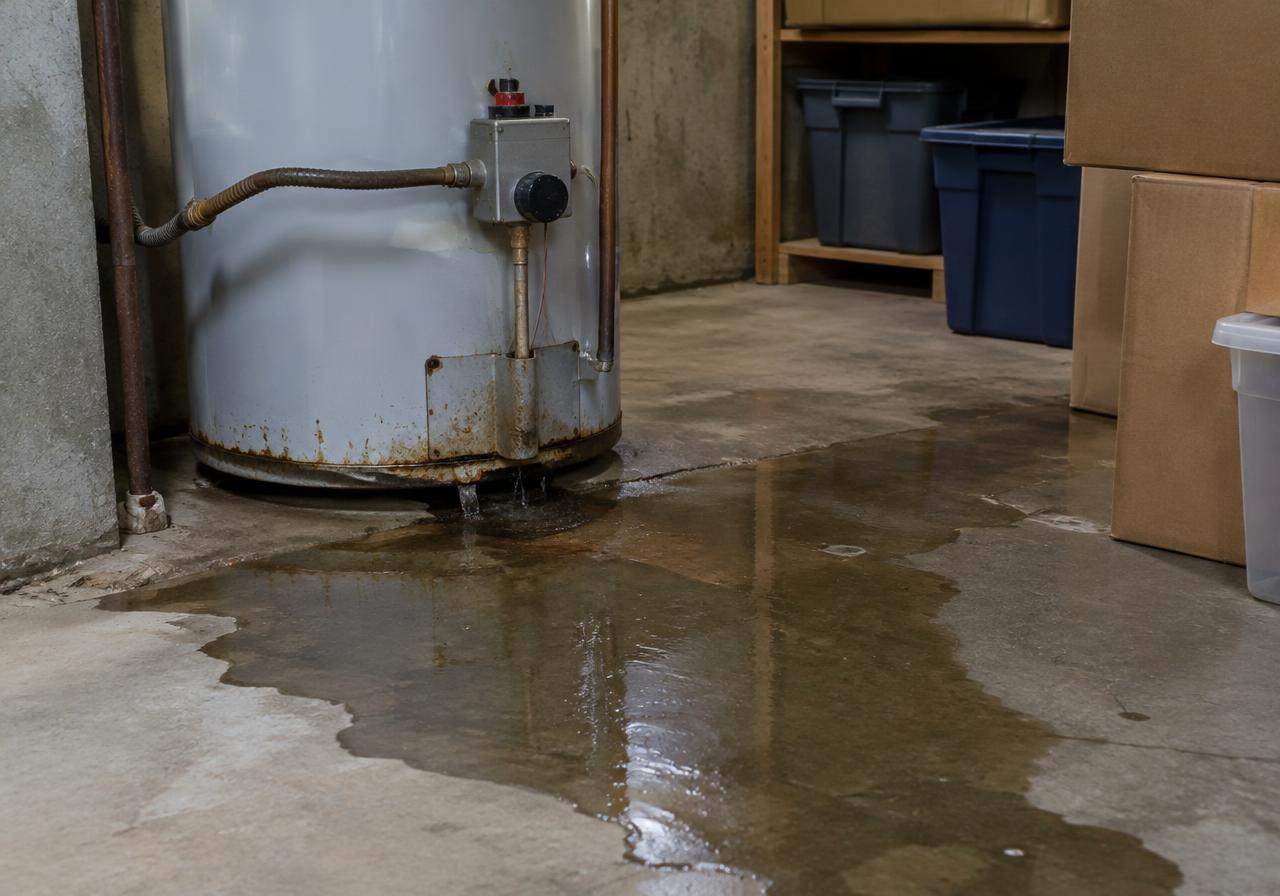
Is your water heater leaking? How to Identify the Problem in Your New Jersey Home
Detecting a water heater leak early can prevent significant damage to your New Jersey home and save you from extensive cleanup efforts.
The first step is to visually inspect your water heater unit and the area around it regularly. Look for puddles of water, damp spots on the floor, or discoloration on the tank's exterior. Even small drips can accumulate over time, especially if your water heater is located in a basement or utility closet where minor spills might go unnoticed initially.
Check all connections, including the cold water inlet, hot water outlet, and the temperature and pressure (T&P) relief valve discharge pipe, for any signs of moisture. Sometimes, what appears to be a leak from the tank itself is actually a loose fitting or a faulty connection that can be tightened or replaced.
Another tell-tale sign of a hidden leak can be a sudden increase in your water bill without a change in usage, which might indicate a continuous, undetected drip that is constantly refilling the tank with fresh water. Also, listen for unusual sounds like dripping or hissing when the water heater is operating, which could point to internal issues.
For homes in New Jersey, especially those with older infrastructure or basements, humidity levels can be naturally higher. It's important to distinguish condensation on the outside of the tank, which is normal under certain conditions, from an actual leak. Condensation usually occurs when cold water enters the tank and the tank surface is cooler than the surrounding air. If the 'leak' dries up quickly, it might be condensation; however, persistent moisture warrants further investigation.
What Causes Water Heaters to Leak in New Jersey Homes?
Water heater leaks often stem from a combination of age, wear and tear, and specific environmental factors common in New Jersey.
One of the most common culprits is corrosion within the tank, particularly for older units. Over time, the protective lining inside the steel tank can degrade, exposing the metal to water and leading to rust. This rust can eventually eat through the tank, creating small pinhole leaks that gradually worsen. The anode rod, designed to attract corrosive elements and prevent tank corrosion, also degrades over time and if not replaced, accelerates tank deterioration.
Sediment buildup is another frequent cause. Hard water, prevalent in many New Jersey municipalities, contains minerals that precipitate and settle at the bottom of the tank. This sediment can harden and trap moisture against the tank's bottom, leading to localized corrosion and eventual leaks. It also reduces heating efficiency and can create hotspots that stress the tank material.
The temperature and pressure (T&P) relief valve, a critical safety device, can also be a source of leaks. If the pressure or temperature inside the tank becomes too high, this valve is designed to open and release water. While a drip from this valve might indicate it's doing its job, it can also signal a faulty valve or excessive pressure, either of which needs to be addressed promptly to prevent a tank rupture.
In New Jersey, the freeze-thaw cycle of our winters can contribute to issues, especially if water pipes leading to or from the heater are exposed or improperly insulated in unheated basements or crawl spaces. Frozen pipes can burst, causing immediate and significant water damage. While this is less common for the water heater tank itself, external plumbing connections are vulnerable. Additionally, repeated stress from heating and cooling cycles within the tank material can contribute to metal fatigue over decades of use.
What Should You Do Immediately After Discovering a Water Heater Leak?
Upon discovering a water heater leak, your immediate actions should focus on stopping the water flow and preventing further damage.
First, turn off the water supply to the water heater. Locate the cold water shut-off valve, typically found on the cold water inlet pipe at the top of the water heater, and turn it clockwise until the water flow stops. If there isn't a dedicated valve for the water heater, you may need to shut off the main water supply to your entire home. Knowing the location of your main water shut-off valve is crucial for all New Jersey homeowners.
Next, turn off the power supply to the water heater. For electric water heaters, flip the circuit breaker labeled for the water heater in your home's electrical panel. For gas water heaters, turn the gas control knob to the 'OFF' position. This prevents potential electrical hazards and stops the heater from trying to heat an empty or partially empty tank.
Begin to contain the water to minimize spread. Use buckets, towels, or wet vacs to absorb or collect any standing water around the unit. Move any valuable or water-sensitive items away from the flooded area. Even a small amount of water can seep into flooring, walls, and belongings, leading to extensive damage if not addressed quickly.
Once the immediate hazard is contained, assess the severity of the leak and the extent of any water damage. Take photos or videos of the leak and the affected areas; this documentation will be vital for any potential insurance claims later on. Avoid attempting complex repairs yourself, especially if the tank itself is compromised, as this can worsen the situation or create safety risks.
Can I Fix a Leaking Water Heater Myself? Mistakes to Avoid
While some minor water heater issues can be simple fixes, attempting to repair a significant leak, especially one originating from the tank, is generally not advisable for New Jersey homeowners.
One common mistake is trying to patch a corroded tank. Applying sealants or epoxy to a rusted section of the tank is a temporary measure at best and will likely fail, often catastrophically, under the pressure and temperature fluctuations of the water heater. If the tank itself is leaking, replacement is almost always the only safe and permanent solution.
Another error is neglecting to drain the tank properly before attempting any repairs. Working on a full or partially full tank can lead to spills, burns from hot water, or an inability to properly access and repair components. Always ensure both water and power/gas are off and the tank is drained if you plan any work beyond tightening a loose fitting.
Attempting to replace critical components like the T&P relief valve without proper knowledge can also be risky. Incorrect installation can lead to continued leaks, or worse, render the safety valve inoperable, increasing the risk of a tank explosion due to overpressure.
Many New Jersey homeowners also mistakenly ignore the signs of a failing anode rod. While not a direct leak cause, a depleted anode rod accelerates tank corrosion, eventually leading to leaks. While replacing an anode rod can extend a heater's life, it's a maintenance task best performed before a leak occurs, not as a fix for an already compromised tank. When in doubt, it's safer and more cost-effective in the long run to consult a plumbing professional rather than risking further damage or injury.
When Should You Call a Professional Plumber for Your Leaking Water Heater?
You should call a professional plumber immediately for a leaking water heater if the leak is persistent, originates from the tank itself, or if you are unsure of the source.
If you observe water coming directly from the main body of the water heater tank, rather than from connections or valves, this almost always indicates internal corrosion and warrants immediate professional attention. A leaking tank is typically beyond DIY repair and signifies the need for a replacement, as patching efforts are usually ineffective and unsafe.
Any leak from the temperature and pressure (T&P) relief valve that doesn't stop after the water heater has cooled, or if it frequently discharges, also requires a professional. This could indicate dangerously high pressure or temperature inside the tank, a faulty valve, or an improperly sized expansion tank. A professional can diagnose the root cause and ensure this critical safety device is functioning correctly.
If you've turned off the water and power, contained the immediate spill, but the situation still feels overwhelming, or you're uncertain about how to proceed, contacting a plumber is the best course of action. Professionals have the tools and expertise to safely drain, inspect, repair, or replace your water heater, ensuring all local plumbing codes are met. For residents of North and Central New Jersey, quick access to professional help is essential to minimize disruption and further damage.
Moreover, if the leak has caused significant water accumulation in your basement or utility area, you'll need expertise not only for the plumbing repair but also for the subsequent water damage cleanup, which often goes hand-in-hand with a professional plumbing service.
The Immediate Threat: Water Damage and Your Home's Structure
A leaking water heater poses an immediate and severe threat to your home's structure and contents, far beyond just the puddles you see.
Water, when left unaddressed, can quickly saturate porous materials like drywall, insulation, wood flooring, and carpeting. Within hours, these materials can begin to swell, warp, and weaken, compromising their structural integrity. For many New Jersey homes, especially those with finished basements, water damage can affect structural wood beams and subflooring, potentially leading to costly repairs.
The longer water stands or materials remain damp, the higher the risk of secondary damage. Mold and mildew can begin to grow within 24 to 48 hours in damp conditions, spreading rapidly through organic materials and posing health concerns. This is a particular concern in New Jersey basements, which often have limited ventilation and can retain moisture for extended periods.
Water can also damage electrical systems, creating hazardous conditions and requiring professional electrical inspection and repair. Personal belongings, furniture, electronics, and stored items in the affected area can be ruined by water exposure, leading to significant financial loss.
Furthermore, persistent moisture can attract pests like rodents and insects, which thrive in damp environments. Addressing a water heater leak promptly isn't just about fixing the plumbing; it's about protecting the long-term health and stability of your entire New Jersey home from the widespread, insidious effects of water damage.
Understanding Insurance Claims for Water Heater Leaks in New Jersey
Navigating an insurance claim for water damage from a leaking water heater in New Jersey requires careful documentation and understanding of your policy.
Homeowner's insurance policies typically cover sudden and accidental water damage. This generally includes damage from a burst water heater or a sudden leak. However, policies often exclude damage caused by neglect, such as a water heater that has been slowly leaking for an extended period due to lack of maintenance, or damage from sump pump failure or flooding from outside the home.
To support your claim, thorough documentation is key. This includes taking numerous photos and videos of the leaking water heater, the flooded area, and all damaged property before any cleanup or repairs begin. Date-stamped evidence is highly valuable. You should also keep a detailed list of all damaged items.
Pipe Rescue Plumbing assists with insurance claim documentation by providing essential information such as photos, moisture readings to show the extent of water penetration, and detailed documentation of the cleanup and restoration work performed. This data is critical for substantiating your claim.
Remember, while we provide documentation and can speak with your adjuster to explain the work done, the customer always files and controls their own insurance claim. We cannot guarantee coverage, as that depends entirely on the specifics of your individual homeowner's insurance policy. It's always best to review your policy or speak with your insurance agent to understand your coverage limits and deductibles as soon as possible after discovering the damage.
The Importance of Professional Service and Transparent Pricing
When dealing with a leaking water heater, securing professional plumbing and water damage services ensures the job is done correctly and safely, providing peace of mind for New Jersey homeowners.
Professional plumbers have the specialized tools, experience, and knowledge to accurately diagnose the source of the leak, determine whether repair or replacement is necessary, and execute the solution according to industry standards and local codes. This is particularly important with gas appliances, where safety is paramount.
Beyond the plumbing repair, professional water damage cleanup crews possess the right equipment for effective water extraction, drying, and restoration. Their expertise prevents secondary damage like mold growth and structural weakening, which often go unnoticed by the untrained eye.
At Pipe Rescue Plumbing, we believe in complete transparency. Before any work begins, we provide a clear and detailed explanation of our pricing. This ensures you understand the costs involved for both the plumbing repair and any necessary water damage cleanup and restoration services, with no hidden fees or surprises.
Choosing professional help not only resolves the immediate problem but also protects your home's long-term integrity and can simplify the insurance claim process with proper documentation. Our availability for service varies by town across North and Central New Jersey, so we encourage you to call (888) 886-4784 to confirm service availability in your area.
Preventative Maintenance Tips for New Jersey Water Heaters
Proactive maintenance can significantly extend the life of your water heater and help New Jersey homeowners avoid unexpected leaks and costly repairs.
Regularly flush your water heater tank to remove sediment buildup. For homes in areas of New Jersey with hard water, this is especially crucial, as mineral deposits can corrode the tank and reduce efficiency. Draining a few gallons from the tank annually can help flush out these particles.
Inspect the anode rod every few years. The anode rod, often called the 'sacrificial rod,' corrodes to protect the steel tank. If it's heavily corroded or nearly depleted, it should be replaced by a professional to prolong the tank's life. This is a key preventative measure against tank leaks.
Check the temperature and pressure (T&P) relief valve annually by carefully lifting the lever for a few seconds to ensure it's not seized. If no water comes out, or if it doesn't seal properly afterward, the valve may need replacement. Always exercise caution as hot water can be discharged.
Examine all pipes and connections leading to and from the water heater for any signs of corrosion, drips, or wear. In unheated basements or crawl spaces common in New Jersey, ensure pipes are properly insulated to protect against freezing during cold winters, which can lead to burst pipes and subsequent leaks.
Finally, pay attention to the age of your water heater. Most conventional tank-style water heaters have a lifespan of 8-12 years. If your unit is approaching or has exceeded this age, it's wise to consider replacement even before a catastrophic leak occurs, especially given the potential for extensive water damage in New Jersey homes.