Why is my water bill suddenly so high?
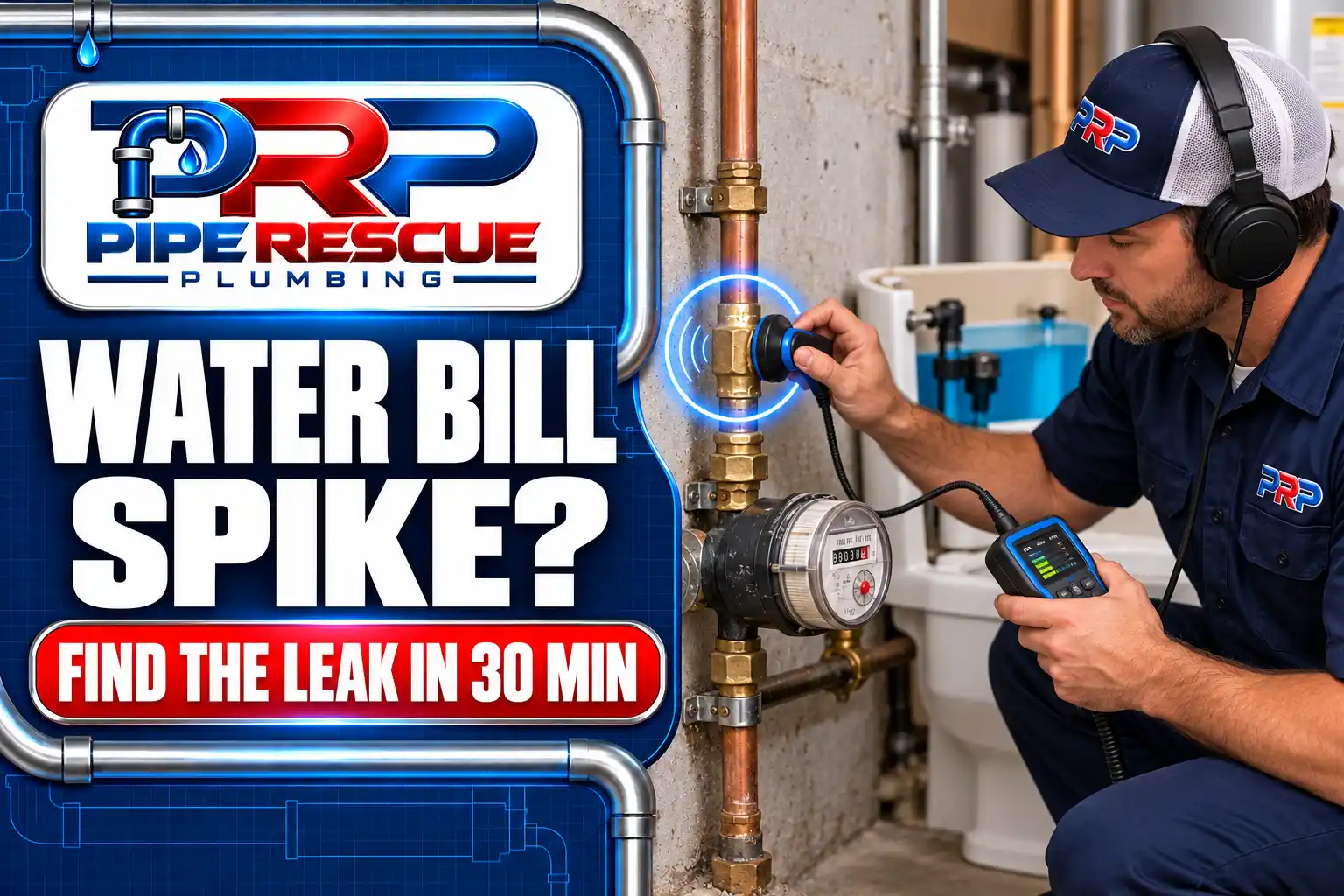
A suddenly high water bill with no change in your habits almost always means water is moving that you cannot see, and the suspects rank in a reliable order: a running toilet (the number one cause, silently wasting up to 200 gallons a day), a slab or underground service line leak, an irrigation system leak, a dripping faucet or running softener, or a leaking water heater valve. Find the culprit with two free tests: the meter test (turn off every fixture and appliance, then watch your water meter's small leak indicator for 15 minutes; movement means water is escaping somewhere), and the toilet dye test (a few drops of food coloring in each tank; color appearing in the bowl within 15 minutes without flushing means that toilet's flapper is leaking). Thirty minutes of detective work sorts nearly every mystery bill, and this guide walks the full sequence: reading the bill itself for clues, the two tests, the suspect list in order of likelihood, and the handful of findings that mean it is time to bring in our team.
First, Interrogate the Bill
Before touching a single valve, the bill itself narrows the hunt. Compare the usage (gallons or cubic feet, not dollars, since rates change) against the same month last year, because a jump against last October means something changed, while a jump against August might just mean the irrigation season. A usage increase that started mid-cycle and runs continuously points to a leak that began on a specific day, and some utilities' portals show daily or hourly usage, where a leak announces itself unmistakably: water flowing at 3 AM, every night, in a sleeping house. If your utility offers that view, it is the single fastest diagnostic in this article.
The Meter Test (15 Minutes, Free, Settles Half the Mystery)
Turn off everything that uses water: faucets, appliances, the ice maker, and make sure nobody flushes. Find your meter (usually in a pit near the curb, or where the line enters the basement) and watch it for 15 minutes. Most meters carry a small leak indicator, a little triangle, star, or dial that spins with even a trickle of flow. Still indicator: your plumbing is tight, and the bill spike lives in usage you have not accounted for (a running softener cycle, irrigation controller gone rogue, a teenager's shower era). Moving indicator: water is escaping somewhere, and the hunt is on.
Then one more move splits the map in half: close the main shutoff valve inside the house (our guide covers where your main water shutoff valve is) and look at the meter again. If the indicator STOPS with the house valve closed, the leak is inside the house, and the suspect list below is your map. If it KEEPS MOVING with the house valve closed, the leak is in the service line between the meter and your foundation, underground, which is a specific and important finding: that line is typically the homeowner's responsibility, the leak never shows itself on any fixture, and it runs 24 hours a day. That one goes straight to our team for main water line repair, and the sooner the better, because every day is on the bill.
The Suspect List, In Order of Likelihood
1. The running toilet. The most common cause of a mystery bill, by a wide margin, and the quietest: a worn flapper lets tank water seep into the bowl continuously, the fill valve quietly tops the tank off, and the cycle wastes up to 200 gallons a day, enough to double a bill on its own, without one audible flush. The test costs a few drops of food coloring: into each tank, wait 15 minutes without flushing, and any color appearing in the bowl convicts that toilet. The fix is a flapper or fill valve, among the cheapest repairs in plumbing, and our toilet repair visits handle it same-day. A toilet that needs the handle jiggled, refills on its own at night (the "ghost flush"), or hisses quietly is guilty before the dye even goes in.
2. The slab or under-floor leak. A hot water line leaking under the slab shows up three ways: the bill, a warm spot on the floor, and a water heater that runs more than it used to. A cold line under the slab may show only the bill and, eventually, dampness at an edge. These never heal, and finding them is precision work: our slab leak detection uses acoustic and thermal tools to locate the leak before anything gets opened, so the repair is a spot fix rather than an excavation.
3. The irrigation system. A cracked sprinkler line or weeping zone valve runs silently underground, often only at scheduled hours, which is exactly why the utility portal's hourly view catches it so well. If the meter test passes with irrigation off but the bill stays high, run each zone and look for the soggy patch, the greenest strip of lawn, or a head that never quite shuts off.
4. The drips you have stopped noticing. One faucet dripping once per second wastes roughly 3,000 gallons a year; a trickling one multiplies that fast. The bathtub spout with the bad washer, the outdoor spigot that never fully closes, the laundry sink nobody visits: each is small, together they are a line item. Our faucet repair calls routinely pay for themselves inside a year of water savings.
5. The water heater and the softener. A weeping temperature and pressure relief valve on the water heater drains hot water (and the energy that heated it) down its discharge pipe out of sight, and a tank corroding at the bottom can seep slowly long before it fails; both are reasons our leaking water heater repair visits start with the T&P line. Water softeners stuck in regeneration recycle water continuously and can waste hundreds of gallons a day while sounding perfectly normal.
What the Findings Mean
Thirty minutes in, you hold one of four results. The dye test convicted a toilet: cheap fix, case closed, and the next bill confirms it. The meter stopped with the house valve closed but you cannot find the fixture: something inside is leaking slowly, often inside a wall or under a floor, and that is water leak detection territory, where our team traces the line with meters and thermal imaging instead of opening surfaces on a guess (our 7 warning signs of a hidden leak guide covers the clues that often accompany this one). The meter kept moving with the house valve closed: underground service line, call us this week, not this quarter. Or everything passed and the bill is still high: pull the utility's hourly data and look at the clock, because usage with a schedule is an appliance or irrigation controller, and usage around the clock means the meter test deserves a second, more patient run.
One more thing worth saying plainly: a leak that doubled your bill has been running for weeks, and water that ran for weeks went somewhere. If any of this hunt ends at damp drywall, a musty smell, or a warm wet floor, the repair is step one and drying the structure properly is step two, and we handle both, with documentation your insurance company can actually use.
The Bottom Line
Read the bill in gallons against the same month last year, run the 15-minute meter test, split the map with the house valve, and dye-test every toilet before suspecting anything exotic, because the number one culprit flushes. Escalate to our team when the meter moves with the house closed (service line), when the floor is warm (slab leak), or when the meter stops but no fixture confesses (hidden line leak). From Bergen County to Newark and across our New Jersey service area, our plumbers find leaks with detection equipment first and repairs second, with pricing explained before any work begins. Mystery bill in hand? Call (888) 886-4784.
Frequently asked questions
Why is my water bill suddenly so high with no visible leak?
Because the most expensive leaks are the invisible ones: a running toilet flapper (up to 200 gallons a day with no sound beyond a faint hiss), a slab or underground service line leak, an irrigation line weeping underground, a stuck water softener, or a dripping water heater relief valve. Start with the two free tests: food coloring in every toilet tank, and the 15-minute water meter test with everything off. Between them, they identify or rule out the culprits behind most mystery bills.
How much water does a running toilet waste?
Up to 200 gallons a day for a badly leaking flapper, which is roughly 6,000 gallons in a billing month, enough to double many bills single-handedly. The tells: a toilet that refills by itself at night (the ghost flush), a handle that needs jiggling, or a quiet hiss from the tank. The dye test settles it: a few drops of food coloring in the tank, 15 minutes without flushing, and color in the bowl means the flapper is leaking. The repair is one of the cheapest in plumbing.
How do I check my water meter for a leak?
Turn off every fixture and appliance that uses water, including the ice maker, and make sure nobody flushes. Watch the meter for 15 minutes: the small triangle, star, or dial (the leak indicator) spins with even a trickle. If it moves, close your house's main shutoff valve and look again. Still moving: the leak is in the underground service line between the meter and the house. Stopped: the leak is inside, and the toilet dye test is your next move.
Who is responsible for a water leak between the meter and the house?
In most New Jersey towns, the homeowner: the utility typically owns the line up to the meter, and the service line from the meter (or curb stop) to the house is yours, including leaks in it. That is worth knowing because a service line leak never shows at any fixture, runs 24 hours a day, and only announces itself on the bill, as a wet or unusually green patch of lawn, or as the meter moving with the house valve closed. Some utilities and insurers offer service line coverage; check before you need it.
How much does a dripping faucet add to a water bill?
A faucet dripping once per second wastes about 3,000 gallons a year, and a fast drip or thin trickle multiplies that several times over. One faucet rarely explains a doubled bill on its own, but a household's collection (the tub spout, the outdoor spigot, the laundry sink) adds up to a steady line item, and a drip is also a worn part telling you it will fail further. The repairs are quick and usually pay for themselves within the year.
When should I call a plumber for a high water bill?
Three findings end the DIY phase: the meter keeps moving with your house valve closed (underground service line leak, running around the clock), a warm spot on the floor or a water heater that never rests (hot water slab leak), or a meter that stops but no fixture confesses after dye tests and a fixture walk (a hidden line leak inside a wall or floor). All three are detection jobs before they are repair jobs, and finding the leak precisely is what keeps the repair small. Our team runs both, with pricing explained before any work begins: (888) 886-4784.
Written by the Pipe Rescue Plumbing team.