
What are the first steps to take after discovering water damage in my New Jersey home?
The immediate aftermath of discovering water damage in your New Jersey home requires quick action to mitigate further loss and prepare for a potential insurance claim.
First, identify and stop the source of the water if it is safe to do so; this might involve turning off the main water supply to your home if a pipe has burst or a fixture is overflowing.
Next, ensure the safety of everyone in the household, keeping in mind that standing water can pose electrical hazards.
Before beginning any cleanup or moving items, thoroughly document the damage by taking clear photographs and videos from multiple angles, capturing both the source of the water and the extent of the impact on your property and belongings.
This initial documentation is crucial for your insurance claim and provides a visual record of the pre-cleanup condition of the affected areas.
Contacting Pipe Rescue Plumbing at (888) 886-4784 promptly is advisable, as our team can begin water extraction and mitigation services, helping to prevent secondary damage like mold growth, which can start within 24-48 hours.
Remember, while you should take steps to prevent further damage, avoid making permanent repairs until after the damage has been assessed, especially if you plan to file an insurance claim.
When should I contact my insurance company after water damage?
You should contact your insurance company as soon as reasonably possible after addressing immediate safety concerns and documenting the initial damage.
Prompt notification helps ensure compliance with your policy's terms, which often require timely reporting of claims.
While it's important to notify them quickly, ensure you have gathered initial documentation (photos, videos) that clearly shows the extent of the damage before making the call.
During this initial contact, you will typically provide a brief description of the incident, the date it occurred, and your policy number.
Be prepared for your insurance company to assign an adjuster to your claim, who will then assess the damage and determine coverage.
It is beneficial to have already secured professional mitigation services from a company like Pipe Rescue Plumbing by this point, as evidence of proactive damage prevention can be viewed favorably.
However, always remember that filing a claim is your decision, and coverage depends entirely on the specifics of your individual insurance policy.
Homeowners in North and Central New Jersey (Bergen, Hudson, Essex, Passaic, Morris, Union, Middlesex, Monmouth, Ocean, Somerset, Mercer, Hunterdon, Burlington, Sussex, Warren counties) should be particularly mindful of their policy details regarding common regional issues like basement flooding or damage from severe weather events such as nor'easters.
How does professional water damage cleanup affect my insurance claim?
Engaging professional water damage cleanup services from Pipe Rescue Plumbing significantly strengthens your insurance claim by providing expert mitigation, thorough documentation, and a clear path to restoration.
Our team performs crucial steps like water extraction, structural drying, and moisture mapping, which are essential for preventing secondary damage such as mold, a common issue in New Jersey's older housing stock and humid basements.
Professional services provide detailed documentation, including moisture readings, photos throughout the cleanup process, and records of equipment used, all of which are vital for your insurance claim.
This comprehensive documentation helps substantiate the extent of the damage and the necessity of the services rendered, making it easier for the insurance adjuster to assess your claim.
Insurance policies generally require homeowners to take reasonable steps to prevent further damage, and professional mitigation is often considered fulfilling this requirement.
When our team provides these services, we also assist homeowners in compiling the necessary paperwork and communicating effectively with adjusters, explaining the work performed and its direct relation to the initial water incident.
This partnership helps ensure that your claim is processed as smoothly as possible, allowing you to focus on getting your home back to normal.
What types of documentation are critical for a New Jersey water damage claim?
Critical documentation for a New Jersey water damage claim includes comprehensive visual records, detailed inventory lists, and professional reports.
Begin with an extensive collection of photographs and videos taken before any cleanup or repairs, capturing the water source, the affected areas, and damaged contents from various angles.
Next, create a detailed inventory of all damaged personal property, including a description of each item, its estimated age, and approximate replacement cost.
Any receipts for damaged items, if available, should be included to support your claims for personal property.
Crucially, documentation from Pipe Rescue Plumbing, such as moisture readings, detailed reports of water extraction and drying efforts, and 'before and after' photos of the affected structure, will be instrumental.
These professional reports validate the extent of the damage and the necessity of the mitigation work, providing credible evidence to your insurance company.
Keep a detailed log of all communications with your insurance company, including dates, times, names of representatives, and a summary of discussions.
Retain all invoices and receipts for any temporary repairs or emergency services you may have paid for out-of-pocket, as these may be reimbursable.
This meticulous record-keeping is invaluable for homeowners in Bergen, Hudson, Essex, Passaic, Morris, Union, Middlesex, Monmouth, Ocean, Somerset, Mercer, Hunterdon, Burlington, Sussex, and Warren counties, helping to ensure that nothing is overlooked during the claims process.
How does the claims assistance from Pipe Rescue Plumbing work?
Pipe Rescue Plumbing offers claims assistance to help homeowners navigate the often-complex process of filing a water damage insurance claim.
Our assistance primarily involves providing comprehensive documentation of the water damage and our remediation efforts, which is crucial for your claim.
We take detailed photos and videos of the damage, conduct precise moisture readings, and create thorough reports outlining the scope of work performed, including water extraction, drying, and restoration.
This documentation serves as irrefutable evidence for your insurance company regarding the extent of the damage and the necessity of our services.
While we provide this invaluable support, it is important to understand that the customer files and controls their own insurance claim.
We can speak with your insurance adjuster to explain the technical aspects of the damage and the restoration process, ensuring they have a clear understanding of what occurred and what was needed.
Our goal is to equip you with all the necessary information and professional backing to present a robust case to your insurer.
Ultimately, coverage for your water damage depends on the specific terms and conditions of your individual insurance policy, and our role is to support you with expert information and services.
What are common reasons for denied water damage claims in New Jersey?
Water damage claims in New Jersey can be denied for several common reasons, often stemming from specific policy exclusions or issues with how the claim is presented.
One frequent reason is damage caused by 'gradual leaks' or 'long-term seepage,' which policies often exclude because they are considered preventable maintenance issues rather than sudden, accidental events.
Flood damage, particularly from external sources like overflowing rivers or storm surges prevalent in coastal New Jersey areas, is typically excluded from standard homeowners' policies and requires separate flood insurance.
Damage resulting from homeowner negligence, such as failure to properly maintain plumbing or address known leaks, can also lead to denial.
Mold growth that develops due to a prolonged lack of action on a water issue, rather than being an immediate consequence of a covered peril, might also be excluded.
Another common issue is insufficient documentation of the damage or the cause, making it difficult for the adjuster to verify the claim.
Claims filed outside the specified reporting period outlined in the policy can also lead to denial.
It's essential for homeowners in North and Central New Jersey to review their policies carefully to understand what is covered, especially concerning winter pipe bursts and basement flooding, which are common issues in the region due to freezing temperatures and older infrastructure.
How do New Jersey's unique climate and housing stock impact water damage claims?
New Jersey's unique climate and diverse housing stock significantly influence the types of water damage claims homeowners face, requiring specific awareness and preventative measures.
The state experiences distinct freeze-thaw cycles during its winters, causing water in pipes to expand when it freezes, leading to burst pipes—a common source of sudden water damage in homes.
Many homes in North and Central New Jersey, particularly those in older municipalities, feature basements that are susceptible to flooding from heavy rainfall, snowmelt, or groundwater intrusion, especially during severe weather events like nor'easters.
The older housing stock throughout the state often has aging plumbing systems and foundations, which are more prone to leaks and water intrusion over time.
Coastal areas in counties like Monmouth and Ocean face additional risks from storm surges and tidal flooding, which typically fall under flood insurance rather than standard homeowners' policies.
Homeowners need to be proactive with winterization, sump pump maintenance, and gutter cleaning to mitigate these regional risks.
When water damage occurs, understanding whether the cause (e.g., a burst pipe vs. external floodwater) is covered by your specific policy is paramount.
Documentation of maintenance efforts can sometimes support a claim, demonstrating due diligence against preventable damage, especially for issues common to New Jersey's climate and property characteristics.
What should I do if my water damage claim is denied or I disagree with the settlement?
If your water damage claim is denied or you disagree with the settlement offered by your insurance company, it's important to understand your rights and options for recourse.
First, request a written explanation from your insurer detailing the exact reasons for the denial or the basis of their settlement offer.
Review your insurance policy thoroughly again, paying close attention to the specific clauses and exclusions cited by the company.
Gather any additional documentation or evidence that supports your claim, such as further photos, expert opinions from Pipe Rescue Plumbing regarding the cause and extent of damage, or receipts for mitigation work.
You can then formally appeal the decision with your insurance company, presenting your new evidence and a clear argument against their denial or settlement.
If internal appeals are unsuccessful, consider filing a complaint with the New Jersey Department of Banking and Insurance (NJDBI), which regulates insurance companies in the state and can mediate disputes.
In some complex cases, consulting with an independent public adjuster or an attorney specializing in insurance claims may be beneficial, as they can negotiate on your behalf and help interpret policy language.
Remember, persistent and well-documented communication is key throughout this process, and knowing your policy's specifics is your strongest tool.
Can I prevent future water damage in my New Jersey home?
Preventing future water damage in your New Jersey home involves a combination of regular maintenance, seasonal preparations, and smart home technologies.
Regularly inspect and maintain your plumbing system, including pipes, fixtures, and water-using appliances, looking for any signs of leaks or corrosion, especially in older homes prevalent across Bergen, Hudson, and Essex counties.
During New Jersey's harsh winters, take proactive steps to prevent frozen pipes by insulating exposed pipes in unheated areas like basements, crawl spaces, and attics, and by keeping your home adequately heated.
Ensure your gutters and downspouts are clear of debris to properly divert rainwater away from your foundation, which is crucial for preventing basement flooding, a common issue during nor'easters and heavy rainfall.
Check your roof for damaged or missing shingles and ensure proper flashing around chimneys and vents to prevent leaks.
Consider installing a sump pump in your basement or crawl space, particularly if you reside in a flood-prone area, and ensure it is regularly tested.
Investing in smart home leak detectors that can alert you to water presence can provide early warning of potential issues, allowing for quick intervention.
Addressing small leaks promptly can prevent them from escalating into significant water damage, saving you from costly repairs and complex insurance claims in the future.
What does 'water damage restoration' involve after water extraction?
After the initial water extraction, water damage restoration involves a comprehensive process to dry, clean, repair, and rebuild your New Jersey home to its pre-damage condition.
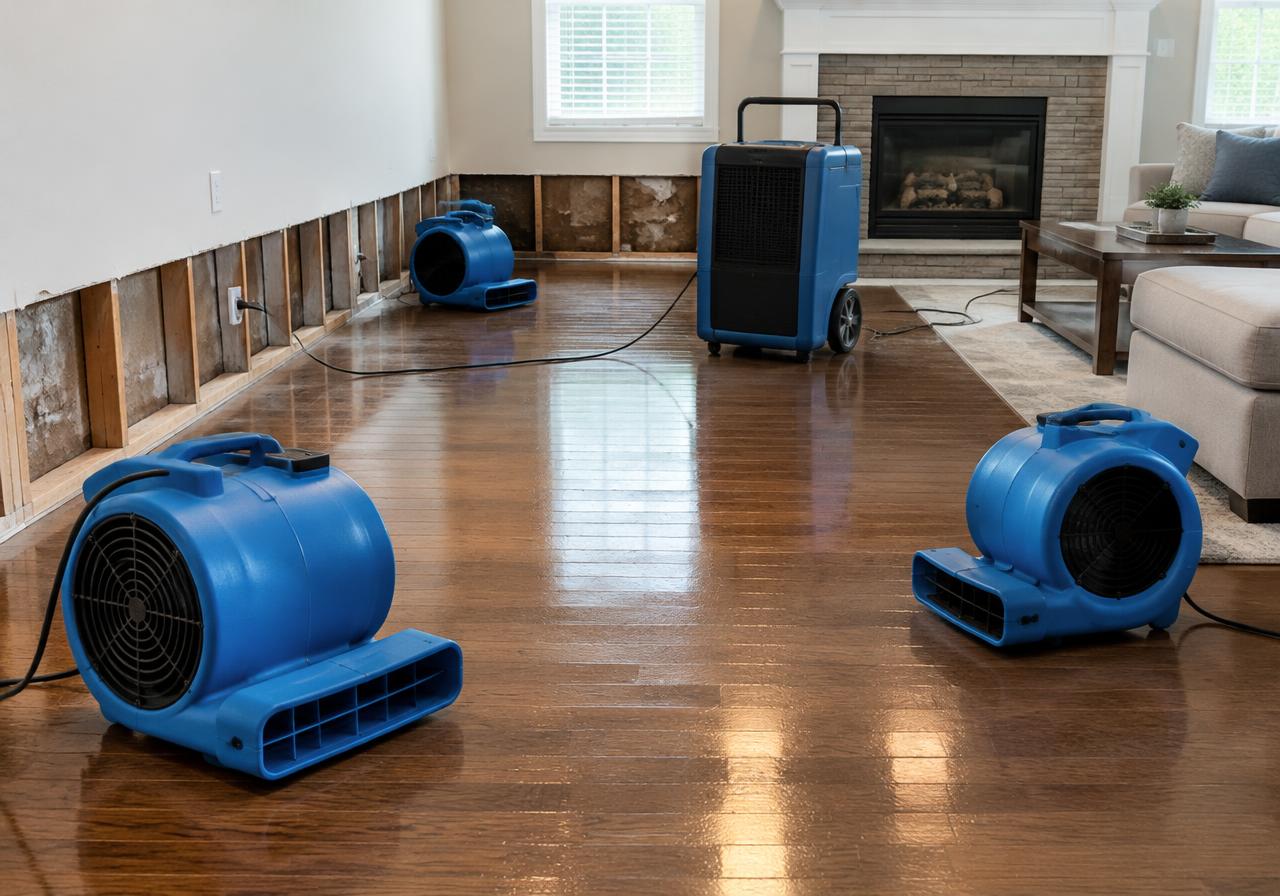
The first critical phase is professional drying, where specialized equipment such as industrial-grade dehumidifiers and air movers are strategically placed by Pipe Rescue Plumbing technicians to remove moisture from structural elements and contents.
This step is vital for preventing secondary damage like mold growth and further deterioration of building materials.
Following drying, all affected areas are thoroughly cleaned, disinfected, and deodorized to eliminate contaminants and odors that can result from water damage.
Any materials that are severely damaged or contaminated, such as certain types of drywall, insulation, or flooring, are carefully removed and disposed of.
The restoration phase then begins, which can involve a range of repairs from minor fixes like painting and carpet replacement to more extensive structural work, such as replacing drywall, flooring, or even cabinetry.
Our team works to ensure that all repairs are completed to high standards, restoring both the aesthetics and structural integrity of your home.
Throughout this entire process, Pipe Rescue Plumbing provides continuous documentation, including moisture readings and progress photos, which are essential for your insurance claim, particularly for homeowners in counties like Monmouth and Ocean dealing with extensive damage.
How is pricing for water damage services explained by Pipe Rescue Plumbing?
At Pipe Rescue Plumbing, pricing for water damage services is always explained transparently and thoroughly before any work begins, ensuring New Jersey homeowners understand the costs involved.
Our team will assess the extent of the water damage and the scope of work required, which includes factors such as the category of water, the affected square footage, and the types of materials damaged.
Based on this assessment, we provide a detailed explanation of the services needed, such as water extraction, drying equipment rental, demolition, cleaning, and restoration, along with their associated costs.
We discuss our findings and proposed solutions with you, addressing any questions or concerns you may have about the process or the financial aspects.
Our goal is to ensure you have a clear understanding of the investment required to properly mitigate and restore your property.
While we work with insurance claims by providing comprehensive documentation and communicating with adjusters, it's important to remember that the final coverage depends on your specific policy.
We prioritize clear communication from the outset, so homeowners across our service areas, including Bergen, Hudson, Essex, Passaic, Morris, Union, Middlesex, Monmouth, Ocean, Somerset, Mercer, Hunterdon, Burlington, Sussex, and Warren counties, can make informed decisions about their water damage restoration.